

For Miami Art Week 2026, a concierge eSIM offers sophisticated travelers and art collectors a truly seamless, high-speed connection across Miami-Dade County, eliminating expensive roaming fees and the hassle of physical SIM cards. It provides reliable data for gallery hopping, exclusive event access, and seamless coordination with private services, all from your existing device.
The Non-Negotiable Cost of Connectivity: Miami Art Week
Let's be frank, Miami Art Week is not for the faint of heart, or the light of wallet. Between the Art Basel tickets (expect $65+ for a single day), exclusive parties, and the inevitable last-minute changes to your itinerary, reliable connectivity isn't a luxury, it's a fundamental operating expense. You're not just browsing Instagram; you're confirming attendance at a private dinner in Wynwood, arranging a viewing at an invitation-only pop-up in the Design District, or coordinating with your driver for a dash between Art Miami at One Herald Plaza and Scope Miami Beach. A week of this intensity can easily rack up significant data usage, and the last thing you need is a $200 roaming bill on top of your art acquisitions.
Consider this: for a typical 8-day stint, if you're not careful, your carrier could hit you with charges that make even a small Jeff Koons look affordable. I've seen travelers get blindsided by $10/MB roaming rates, turning a few crucial emails and WhatsApp messages into a financial black hole. A well-chosen eSIM plan, however, can provide you with 20 GB of high-speed data for around $40-60 for the entire week, a small fraction of what most major carriers like AT&T or Verizon would charge for international roaming. This isn't just about saving money, it's about predictable spending in a week where every other cost is wildly variable (and often inflated).
This is where the tactical advantage of an eSIM truly shines, especially for those who demand efficiency and discretion. You're not going to be seen fumbling with a SIM ejector tool at a Pace Gallery reception, are you?
Roaming Nightmares and eSIM Realities
I've personally witnessed the fallout from inadequate planning. A prominent gallery owner, arriving from London for Art Basel, once found himself without data for the first crucial hours because his physical SIM card was incompatible, and he couldn't find an open mobile store near his hotel on South Beach. Every minute of lost connectivity during Art Week translates directly to lost opportunities, whether it's missing a bid on a piece or failing to connect with a crucial contact.
| Connectivity Option | Estimated 8-Day Cost (20GB equivalent) | Pros | Cons |
|---|---|---|---|
| Carrier Roaming (e.g., AT&T, Verizon) | $160 - $200+ | Convenient, uses your existing number | Extremely expensive, hidden fees, data throttling |
| Local Physical SIM (T-Mobile, Mint Mobile) | $30 - $50 | Cost-effective, local number, high data limits | Requires finding a store, physical installation, losing home SIM access, potential activation delays |
| Concierge eSIM | $40 - $60 | Instant activation, no physical swap, retains home number for calls/SMS, competitive pricing, high-speed data | Requires eSIM-compatible phone, data-only (use VoIP for calls) |
The math is simple. If you're planning to use 2.5 GB of data per day (easily done with maps, emails, social media, and a few video calls) over an 8-day period, that's 20 GB total. At a typical $10/MB roaming rate, that's $20,000. Clearly an exaggeration for typical use, but even with roaming packages, the costs quickly escalate far beyond a flat-rate eSIM. For instance, AT&T's International Day Pass is $10/day, adding $80 to an 8-day trip on top of your regular bill, but you're still relying on their roaming partners and their data speeds, which can be inconsistent. A dedicated 20GB eSIM for a fraction of that cost provides not just savings, but peace of mind.
Why eSIM Is Your Art Week Concierge
Think of an eSIM as your invisible, always-on connectivity concierge for Miami Art Week. You're not waiting in line at a T-Mobile store on Washington Avenue, nor are you relying on potentially congested hotel Wi-Fi. With an eSIM, your connectivity is handled before you even touch down at Miami International (MIA), allowing you to step off the plane and immediately confirm your car service, check your Art Basel app for last-minute schedule changes, or send a crucial message to a gallerist.
The discerning traveler values efficiency and discretion above all. An eSIM embodies this. It's a digital solution that seamlessly integrates into your existing smartphone, providing robust data coverage without any physical fuss. This means your primary SIM card, with your home number, remains active for incoming calls and texts, while your eSIM handles all data traffic. No more swapping cards, no more dual-SIM trays, just uninterrupted connectivity.
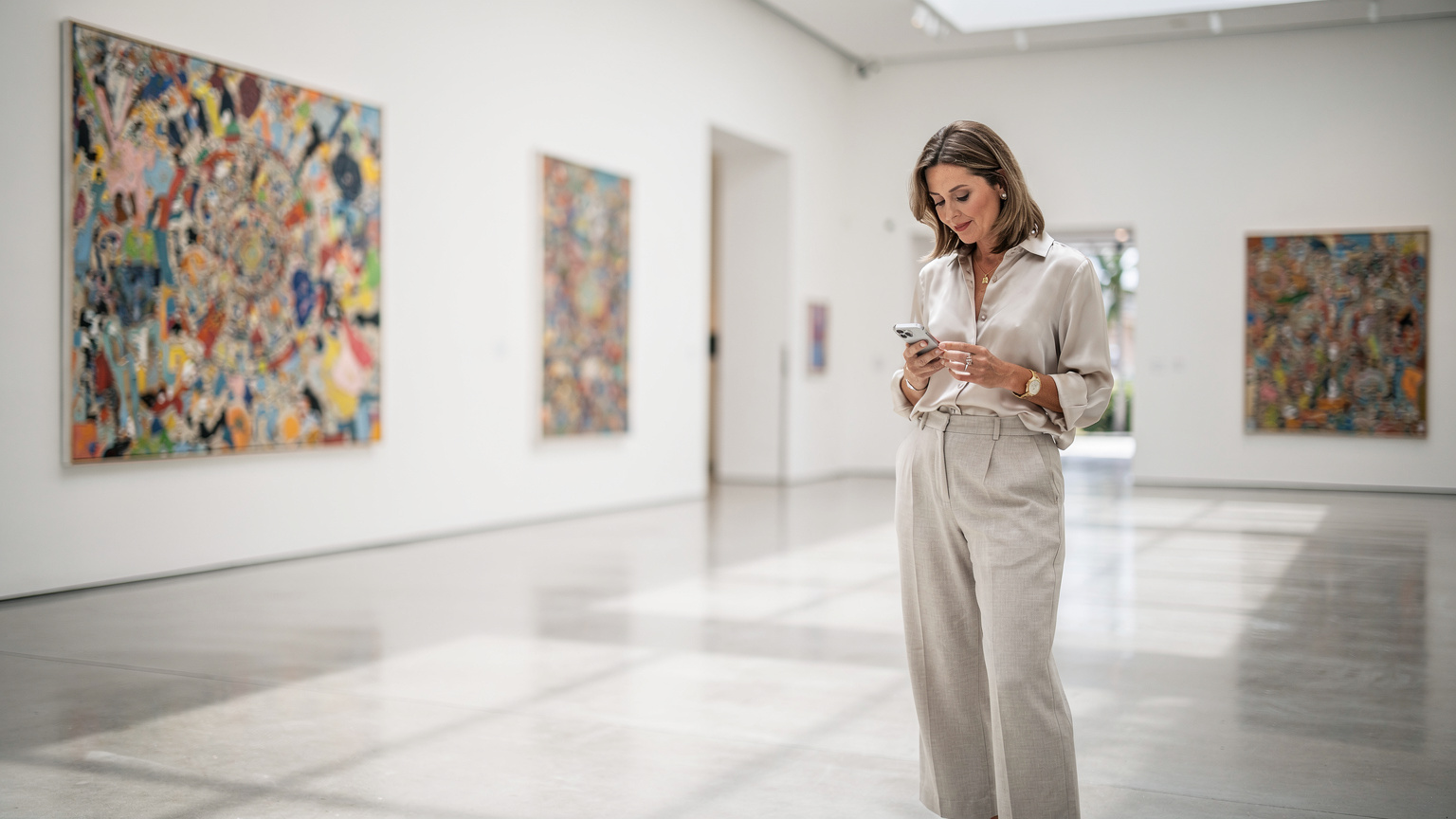
The Elegance of Pre-Arrival Setup
The true luxury of an eSIM lies in its pre-arrival setup. Imagine completing the entire process while enjoying a pre-flight Negroni in the lounge at Heathrow or JFK. No local currency needed, no language barriers, just a quick QR code scan and a few taps on your phone. This foresight is what separates the seasoned traveler from the unprepared tourist.
Here’s how it typically works for a seamless Miami arrival:
- Purchase your eSIM online: Select a plan that matches your anticipated data needs for Art Week (we’ll break down data usage shortly).
- Receive your QR code: This is usually sent instantly to your email.
- Scan and activate: Before you depart, or even on the plane, scan the QR code using your phone's camera settings.
- Arrive connected: As your plane lands at MIA, your phone automatically connects to the local network, and you're ready to go.
This streamlined process means you can hit the ground running, whether your first stop is the Rubell Museum or your hotel in Brickell. (And let's be honest, finding a reliable data connection is far more important than finding your luggage when you're on a tight schedule.)
Retaining Your Home Number for Critical Contacts
One of the often-overlooked benefits for Art Week attendees is the ability to keep your primary phone number active for calls and SMS. Many important contacts, from your personal assistant to your bank, rely on your established number. With an eSIM for data, your home SIM remains active for these critical communications, while all your internet usage for mapping, messaging, and streaming is routed through your affordable eSIM data plan. This dual functionality ensures you're always reachable on your main line without incurring exorbitant international roaming charges for data.
eSIM Activation Made Simple: Your Private Gallery Pass
Activating an eSIM is remarkably straightforward, requiring only a few minutes and a Wi-Fi connection. This ease of use is a significant advantage when your schedule during Miami Art Week is packed with appointments and exclusive events. You certainly don't have time to troubleshoot connectivity issues.
Let’s walk through the steps, ensuring you're ready to go before your flight even begins its descent over the Everglades.
Step-by-Step eSIM Installation on Your iPhone
For iPhone users, the process is intuitive. Make sure you have a stable Wi-Fi connection before you start. Many airport lounges offer this for free, or you can use your home network.
- Access Settings: Open the 'Settings' app on your iPhone.
- Navigate to Cellular/Mobile Data: Tap on 'Cellular' or 'Mobile Data,' depending on your region.
- Add eSIM: Select 'Add eSIM' or 'Add Data Plan.'
- Scan QR Code: Choose 'Use QR Code' and scan the QR code provided in your purchase confirmation email. Your phone's camera will open automatically.
- Follow Prompts: Your iPhone will guide you through a few simple steps, asking you to label your new eSIM (e.g., 'Miami Data' or 'Travel eSIM') and set it as your primary line for cellular data. Ensure your home line is still set for calls and SMS if you wish to receive them.
- Confirm Activation: Once installed, you'll see your new eSIM listed in your 'Cellular' settings. It should activate automatically upon arrival in Miami.
This process is designed for speed and convenience, a far cry from the days of hunting down a SIM card vendor in a foreign country. You're buying time, which during Art Week, is more valuable than gold.
Android eSIM Setup: A Quick Guide
Android devices offer a similar seamless activation process. While exact menu names might vary slightly between manufacturers (Samsung, Google Pixel, etc.), the core steps remain consistent.
- Open Settings: Go to 'Settings' on your Android phone.
- Network & Internet: Tap on 'Network & Internet' or 'Connections.'
- SIMs / Mobile Network: Look for 'SIMs' or 'Mobile Network' and then 'Add SIM' or 'Download a SIM.'
- Scan QR Code: Select 'Download an eSIM' and then 'Next' to scan the QR code from your email.
- Configure Settings: Follow the on-screen prompts to name your eSIM and set it for mobile data. Make sure your existing SIM is still designated for calls and texts if you need to receive them.
- Ready for Miami: Your eSIM will be installed and ready to connect to local networks upon your arrival in Miami.
Even if you're crossing multiple time zones, activating your eSIM can be done in the comfort of your departure lounge, or even mid-flight if your plane offers Wi-Fi. This eliminates any last-minute scramble upon landing, allowing you to focus on the art, not your phone’s signal.
Data Consumption Demystified: What You Really Need
During a high-stakes event like Miami Art Week, your data usage patterns will likely differ from your typical day-to-day. You’ll be relying heavily on navigation apps, event schedules, instant messaging for coordination, and perhaps even some light streaming during downtime. Understanding your real needs is key to choosing the right USA eSIM plan and avoiding both overspending and unexpected data depletion.
For Art Week, your data consumption won’t just be about leisure. It’s about operational efficiency. Missing a turn to a satellite fair like Nada Miami or failing to download a crucial PDF of an artwork's provenance due to a data shortage is simply not an option.
Calculating Your Art Week Data, App by App
Let's break down typical data consumption for a discerning Art Week attendee:
- Navigation (Google Maps, Waze): Essential for getting between fairs, hotels, and restaurants. Expect around 50-100 MB per hour of active navigation. Given the sprawl of Miami, you'll likely be using this a fair bit.
- Messaging (WhatsApp, iMessage, Signal): Constant communication is key. Text messages are minimal, but sending photos and short videos of art pieces to advisors or clients can quickly add up. A few hundred MB per day is a reasonable estimate for heavy use.
- Email & Web Browsing: Checking emails, loading gallery websites, and reading art market news. This can range from 100 MB to 500 MB daily depending on how many large attachments you're viewing.
- Social Media (Instagram, Artsy): For many, Art Week is also a social event. Uploading high-resolution photos and videos from openings will consume significant data. Budget at least 500 MB per day, potentially more if you're actively engaging with live stories or video.
- Video Calls (FaceTime, Zoom): Coordinating with your team or family. A 30-minute video call can use 300-500 MB, so plan accordingly if you have several scheduled.
- Streaming (Music, Podcasts): While not strictly Art Week related, many find music or podcasts essential for transitions. Spotify uses around 40-150 MB/hour.
Combining these, a moderate user focused on connectivity for work and essential social interactions could easily hit 1.5-2 GB per day. For a more intensive user, sharing high-res media, taking multiple video calls, and relying heavily on navigation, 3-4 GB per day is not unrealistic.
Recommended Data Packages for Different Profiles
Based on these estimates, here are some recommended data packages for an 8-day Art Week visit:
| User Profile | Daily Data Estimate | Recommended 8-Day eSIM Plan | Why This Plan? |
|---|---|---|---|
| Light User (Emails, Maps, Basic Messaging) | ~1 GB/day | 8-10 GB total | Covers essentials without worry. Minimal social media, no video calls. |
| Moderate User (All of the above + Social Media, some Photo Sharing) | ~2 GB/day | 15-20 GB total | Ideal for most Art Week attendees, balancing communication, navigation, and sharing. |
| Heavy User (Constant Coordination, Video Calls, Large File Transfers, Heavy Social) | ~3-4 GB/day | 25-30+ GB total (or unlimited if available) | For gallerists, advisors, or anyone for whom connectivity is mission-critical. Peace of mind is paramount. |
Remember, it's always better to slightly overestimate than to run out of data at a critical moment. You can always top up an eSIM plan, but that's another task you won't want to be doing mid-exhibition.
Local Alternatives for the Truly Committed Shoestring Budget
While an eSIM offers unparalleled convenience for the luxury traveler, for absolute transparency, it’s worth noting the physical alternatives. If your budget is tighter than a drum, and you genuinely don't mind the hassle, local physical SIM cards can save you a few dollars. However, for a high-profile event like Art Week, the trade-offs in time and convenience are significant.
For someone tracking every single euro, the physical SIM route might seem appealing. For instance, T-Mobile offers a prepaid plan that can give you unlimited data for around $40-50 for a month. Mint Mobile, which runs on T-Mobile's network, is even cheaper, often around $15-20 for a small data package, or $30 for 10 GB for a month. The catch? You have to physically acquire them.
The Physical SIM Hunt in Miami
If you're dead set on a physical SIM, here's the typical process:
- Locate a Store: From MIA, you'll need to find a T-Mobile, AT&T, or Verizon store. There are options in nearby Doral, or further afield in South Beach or Brickell. This means taking a taxi or rideshare, which adds to your cost and time.
- Purchase and Activate: You'll need to select a plan, pay, and have the SIM card inserted and activated. Expect to spend at least 30-60 minutes in the store, potentially more during peak tourist seasons.
- Configuration: While most physical SIMs work out of the box, sometimes APN settings need to be manually configured.
- Losing Your Home SIM: The biggest drawback is that you'll have to remove your home SIM, meaning you'll lose access to your primary phone number for calls and texts unless you have a dual-SIM phone.
For a budget backpacker hitting hostels, this might be a viable strategy. For Art Week, where time is money and appearances matter, a physical SIM is a false economy. The hour you spend hunting for a T-Mobile store could be an hour spent networking at an exclusive preview or securing a coveted acquisition. Even a cheap local SIM for Mexico City on a Shoestring feels more appropriate for that type of travel than Art Basel.
Public Wi-Fi: The Ultimate False Economy
Relying solely on public Wi-Fi at your hotel, art fairs, or cafes is a gamble you simply cannot afford during Art Week. While many venues offer complimentary Wi-Fi, it's often:
- Overloaded: Thousands of people trying to connect will lead to slow, unreliable speeds.
- Insecure: Public Wi-Fi networks are notoriously vulnerable to security breaches, a significant concern when you're dealing with sensitive communications related to high-value art transactions.
- Limited Coverage: You're only connected when within range, leaving you stranded for data when moving between locations.
For critical communications, this is a non-starter. You need consistent, private, and fast data, which public Wi-Fi simply cannot guarantee. The cost of a data breach or a missed connection far outweighs the perceived savings of free Wi-Fi.
Navigating Miami with eSIM: Your Digital Art Guide
Miami Art Week isn't confined to a single exhibition hall. It sprawls across South Beach, Wynwood, the Design District, and downtown Miami. An eSIM ensures you have real-time access to maps, ride-share apps, and event schedules, making your movements effortless and efficient. Forget fumbling with paper maps or asking for directions.
"During Art Week, time is the ultimate luxury. Having an eSIM pre-activated meant I could instantly switch between gallery locations in Wynwood and dinner reservations in South Beach without a single connectivity hiccup. It's truly indispensable." - A frequent Art Basel attendee.
Mastering Miami Transit with Your eSIM
While many attendees rely on ride-shares or private drivers, Miami does have public transit options that can be surprisingly efficient for certain routes, particularly the Metromover in downtown and Brickell. Your eSIM will be invaluable for:
- Ride-share apps: Uber and Lyft are essential for getting around, and a strong data connection is critical for requesting rides and tracking your driver.
- Transit apps: Apps like Miami-Dade Transit Tracker or Google Maps public transport feature can help you navigate the Metromover or local bus routes if you decide to explore beyond the art circuit.
- Event shuttles: Art Basel often provides complimentary shuttle services between its main venue and various satellite fairs. Your eSIM ensures you can access the latest shuttle schedules and pickup points in real-time.
Even if you have a driver, having your own data allows you to independently verify routes, check traffic, and stay informed, rather than relying solely on their navigation. (Because who hasn't had a driver take a 'scenic' route?)
Staying Ahead of the Art World Curve
Art Week is dynamic. Exhibitions pop up, events are added, and schedules shift. With your eSIM, you can:
- Receive instant updates: Get real-time notifications from the Art Basel app, gallery newsletters, or your preferred art market news sources.
- Confirm last-minute invitations: Private viewings and exclusive parties often send out invites or updates with very short notice. Your immediate connectivity ensures you don't miss out.
- Research on the go: Spot an intriguing artist? Pull up their bio, past works, and market performance instantly, informing your acquisition decisions.
The ability to react quickly and stay informed is a powerful tool in the fast-paced environment of Miami Art Week. It’s not just about being connected, it’s about being empowered.
Handling Connectivity Across Borders: Before and After Miami
For many international travelers, Miami Art Week is just one stop on a larger itinerary. Perhaps you're coming from a European gallery tour or heading to a client meeting in New York afterwards. An eSIM's flexibility truly shines here, allowing you to manage multiple data plans for different regions without ever touching a physical SIM card. This is particularly relevant for those who frequently cross borders for business or leisure, making seamless transitions from one country to another.
Think about a scenario where you've just concluded a major art fair in London, then fly to Miami, and perhaps plan a quick getaway to the Caribbean. Swapping physical SIMs for each leg of the journey is not only impractical but also risks losing tiny, essential pieces of plastic. The digital nature of eSIMs streamlines this entire process, ensuring you maintain optimal connectivity no matter where your itinerary takes you.
Multi-Country eSIMs for the Global Art Collector
For those whose travel extends beyond the US, consider a regional or global eSIM plan. These plans cover multiple countries, often at a more economical rate than purchasing individual country-specific eSIMs. If your Art Week experience is bookended by visits to, say, art fairs in Berlin or client meetings in Paris, a multi-country Europe-42 eSIM 2026 could be your ideal solution. You activate it once, and it provides data across all included nations.
For instance, if you're traveling from Europe to Miami, you could have:
- eSIM 1 (European plan): Active for your time in Europe.
- eSIM 2 (USA plan): Activated just before your flight to Miami.
You can easily switch between these profiles in your phone's settings, ensuring you always have the most cost-effective and reliable data connection for your current location. This is a level of travel tech sophistication that discerning individuals appreciate, minimizing logistical headaches.
Border-Crossing Edge Cases and eSIM Solutions
While Miami is not a land border crossing, the principle of seamless transition applies to air travel. For example, if you're flying directly from a country with strict internet censorship to the US, having your eSIM pre-activated means you bypass any local restrictions or potential surveillance on arrival. Your connection is secure and ready from the moment you land. This is a subtle but important advantage for individuals who value privacy and unrestricted access to information.
Consider scenarios where you might be making a quick hop to a nearby Caribbean island after Art Week. Many islands, even close to the US, have entirely different cellular networks and pricing structures. Rather than buying a separate physical SIM for Barbados or the Bahamas, a regional Fiji & Beyond: Island Hopping with an eSIM in 2026 style plan, if extended to the Caribbean, would allow you to continue your seamless connectivity. This foresight ensures continuity, which is invaluable when coordinating complex itineraries.
The Art of Seamless Travel: Beyond Miami
The lessons learned from optimizing connectivity for Miami Art Week extend far beyond the white tents and exclusive parties. The same principles of pre-planning, efficient activation, and data management can revolutionize all your international travels, turning potential connectivity headaches into smooth, effortless experiences. Whether you're a seasoned globetrotter or planning your next major international event attendance, embracing the eSIM is a strategic move towards smarter, more secure, and more cost-effective travel.
For example, imagine you're a gallerist regularly attending major events. Having a suite of regional eSIMs ready on your device means you're always prepared, whether you're heading to the European Christmas Markets 2026 or a design fair in Milan. This proactive approach saves time, reduces stress, and allows you to focus on the core purpose of your travel.
Future-Proofing Your Travel Connectivity
As technology evolves, eSIMs are becoming the standard for global connectivity. More devices are launching with eSIM-only capabilities, and network coverage continues to expand. Investing in understanding and utilizing eSIM technology now is not just about convenience for Art Week 2026, it's about future-proofing your entire travel strategy. You're adopting a smarter, more integrated approach to staying connected, one that aligns with the sophistication and efficiency demanded by modern international travel.
For a deeper dive into how eSIMs facilitate seamless transitions for busy professionals, you might find our guide Boarding Gate to Boardroom: Your 2026 eSIM Guide for Seamless Transitions particularly insightful. It breaks down the tactical advantages of eSIMs for various professional travel scenarios, ensuring you're always prepared.
Where to Find Your Concierge eSIM
Ready to secure your seamless connectivity for Miami Art Week 2026? You can explore a range of tailored eSIM plans designed for the US and multi-country travel directly on our site. These plans are curated to provide the high-speed data and reliability you expect, ensuring your focus remains squarely on the art, not on your phone signal.
Should you have any further questions about specific plans or activation, our comprehensive FAQ section provides detailed answers to common inquiries, ensuring you have all the information you need at your fingertips.
Frequently Asked Questions
What is the primary benefit of using an eSIM for Miami Art Week 2026?
The primary benefit is seamless, high-speed connectivity without the hassle of physical SIM cards or exorbitant roaming fees. You can activate it before arrival, retain your home number, and ensure uninterrupted data for navigating fairs, coordinating logistics, and staying informed on exclusive events.
How much data will I realistically need for an 8-day trip to Miami Art Week?
For a moderate user relying on navigation, messaging, emails, and some social media, 15-20 GB of data over 8 days is a safe estimate. Heavy users, especially those making video calls or sharing large files, should consider 25-30+ GB or an unlimited plan to avoid running out.
Can I keep my original phone number while using an eSIM in Miami?
Yes, absolutely. One of the key advantages of an eSIM is that your primary physical SIM card, with your home number, remains active for calls and SMS. The eSIM will handle all your data traffic, allowing you to use both numbers simultaneously without physical card swapping.
Is an eSIM difficult to activate, especially for someone not tech-savvy?
Not at all. eSIM activation is straightforward, typically involving scanning a QR code sent to your email and following a few simple prompts in your phone's settings. It takes only a few minutes and can be done from anywhere with Wi-Fi, even before you depart for Miami.
Are there any cheaper alternatives to an eSIM for data in Miami?
Yes, local physical SIM cards from carriers like T-Mobile or Mint Mobile can be slightly cheaper, but they require a trip to a physical store, manual activation, and you'll lose access to your home number. Public Wi-Fi is free but often unreliable and insecure. For the convenience and reliability required during Art Week, an eSIM offers superior value.
What if I'm traveling to other countries before or after Miami Art Week?
An eSIM is ideal for multi-country travel. You can install multiple eSIM profiles on your device and easily switch between them for different regions, such as a European plan before Miami and a USA plan for the Art Week. This eliminates the need for physical SIM swaps at each border.