
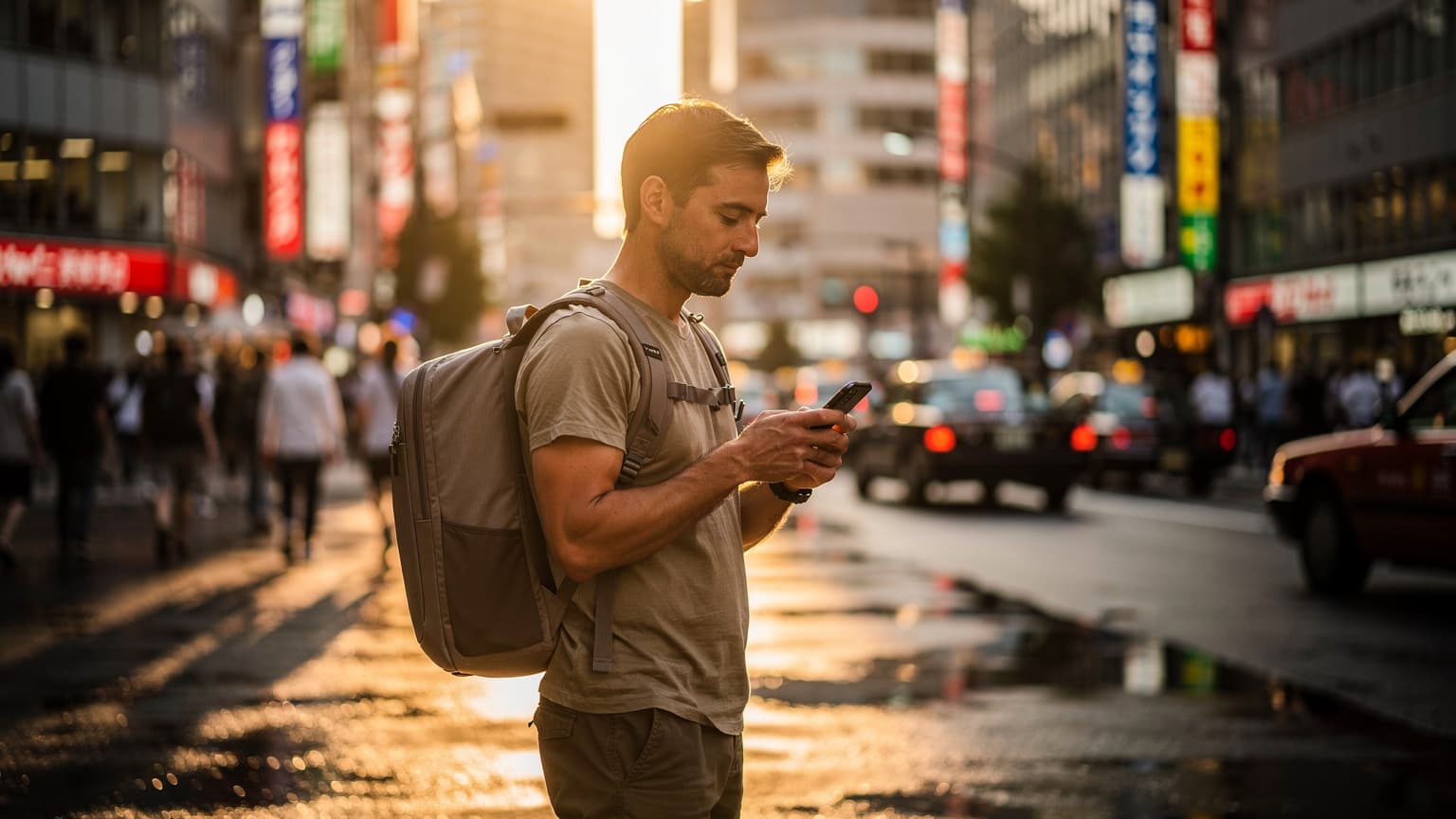
eSIMs and Tokyo Arrival: A Seamless Start
Landing at Narita or Haneda in 2026, you're immediately hit with Tokyo's unique energy. The last thing you want is fumbling for Wi-Fi or trying to explain your data needs in broken Japanese at a kiosk. This is where an eSIM becomes invaluable. It's about stepping off the plane, switching on your phone, and having instant connectivity.
I've been on the road for four years now, and the ritual of landing somewhere new, especially a city as sprawling as Tokyo, always starts with checking my data. The older methods, like physical SIMs, often meant waiting in lines at the airport, dealing with activation delays, or worse, finding out your unlocked phone isn't compatible with a local carrier's bands. With an eSIM, all of that disappears. You can activate it before you even leave home, or while you're still taxiing on the runway. It's a game-changer for anyone who values their time and sanity, particularly after a long-haul flight.
Immediate Benefits of eSIM on Arrival
- Instant Connection: No more hunting for free airport Wi-Fi that inevitably drops out just as your ride share app loads. Your eSIM is live.
- Bypass Language Barriers: Skip the awkward conversations at the mobile provider counter. Everything is managed digitally.
- Keep Your Home Number: Your primary SIM slot remains free, allowing you to receive important calls or texts on your original number while using the eSIM for data. This is crucial for two-factor authentication from your home bank, for instance.
- Seamless Navigation: Open Google Maps or Apple Maps immediately to plot your course to your hotel in Ginza or Shibuya without a second thought.
Why Pre-Arrival eSIM is Your Best Bet for Tokyo 2026
Tokyo is a city of efficiency, and your connectivity should match that. Waiting to sort out your data once you're there is a rookie mistake. I've seen countless travelers get stuck, unable to call their hotel or access essential travel apps, simply because they underestimated the immediate need for data. Japan's public Wi-Fi infrastructure is decent, but it's often segmented and requires registrations, which again, needs data to complete.
The real value of a Japan eSIM lies in its proactive nature. You set it up before you even board your flight. This means less stress, more time to explore, and the peace of mind that comes with knowing you're always connected. It's a lesson learned from experiencing those moments where you desperately need to translate a menu or check train times, only to find yourself without a connection.
The Convenience Factor: Planning Ahead
Pre-ordering your eSIM means you're prepared. You receive a QR code or activation details via email, and with a few taps, your phone is ready for Japan. For those using an iPhone, the process is incredibly straightforward, almost a no-brainer if you follow a guide like the iPhone eSIM activation guide. This level of preparedness allows you to focus on the experience, not the logistics.
Think about it: from checking into your hotel to finding that specific ramen spot in Shinjuku Golden Gai, every interaction in Tokyo is smoother with an active data connection. Even ordering a coffee at a place like Streamer Coffee Company in Shibuya often involves scanning a QR code for a loyalty program, something you can't do without data.
Choosing the Right eSIM Plan for Your Tokyo Stay
Not all eSIM plans are created equal, especially for a data-hungry city like Tokyo. Your choice depends on your usage patterns and the length of your stay. Are you just here for a week-long business trip, staying mostly within your hotel and a few meeting venues? Or are you planning a month-long deep dive into Tokyo's neighborhoods, perhaps even venturing out to Hakone or Kyoto?
For short trips, a smaller data package, say 5-10 GB, might suffice. But if you're planning a longer stay or anticipate heavy usage, streaming, video calls, or using your phone as a hotspot for a laptop (a common practice in co-working spaces), then a larger plan, 20 GB or even unlimited, is a better investment. Always check the validity period, too. Some plans expire after 7 days, others after 30, and some offer longer durations tailored for extended stays.
| Plan Type | Recommended Usage | Typical Data Amount | Best For |
|---|---|---|---|
| Short-Term Tourist | Maps, social media, light browsing | 5 GB, 7 days | Weekend trips, brief layovers |
| Mid-Range Traveler | Streaming, video calls, moderate work | 15-20 GB, 15-30 days | One to two-week vacations, short business trips |
| Digital Nomad/Long Stay | Heavy work, extensive streaming, hotspot use | 50 GB or Unlimited, 30+ days | Extended stays, remote work, heavy data users |
Data Speed and Coverage: What to Look For
In Tokyo, you'll primarily be connecting to NTT DoCoMo or SoftBank networks, both of which offer excellent 5G and 4G LTE coverage across the city and beyond. When choosing an eSIM, verify which local network it uses. High-speed data is not just a luxury here, it's a necessity, especially when navigating the intricate public transport system or trying to make a call over WhatsApp.
I've found that plans leveraging DoCoMo tend to be incredibly robust, even in crowded areas like Shibuya Crossing or deep within the subway tunnels. While the Areola eSIM might be geared for Japan's northern peaks, for Tokyo's urban sprawl, look for solid partnerships with major carriers.
Activation on the Go: Getting Your eSIM Up and Running
Activating an eSIM is a straightforward process, but knowing the steps beforehand can save you some head-scratching when you're tired from travel. Most providers will send you a QR code or manual activation details. My advice: download these to your device or print them out as a backup. You don't want to be reliant on Wi-Fi to get your initial data connection going.
Step-by-Step eSIM Activation
- Purchase Your eSIM Plan: Select the data package and duration that fits your Tokyo itinerary. You'll typically receive an email with your QR code.
- Ensure Wi-Fi Access (Initially): While you can often activate without it, having a stable Wi-Fi connection for the initial scan or manual input can smooth out any kinks. This could be your home network before you leave, or airport Wi-Fi if absolutely necessary.
- Scan the QR Code: On your iPhone or Android, go to Settings > Cellular/Mobile Data > Add eSIM or Add Data Plan, then scan the QR code. If you're having trouble, check out a guide on finding your eSIM number, as it sometimes requires manual input.
- Label Your Data Plan: Once installed, label your new eSIM (e.g., "Japan Data") to easily distinguish it from your primary line.
- Set as Primary for Data: In your phone's settings, ensure the new eSIM is selected for cellular data. Keep your home number active for calls/SMS if needed.
It usually takes less than five minutes. I've done it countless times, from airport lounges to cramped economy seats, and it's consistently reliable. The peace of mind knowing you'll be connected immediately upon landing is worth every penny.
Navigating Tokyo with Your eSIM: Essential Apps and Services
Tokyo is a city that runs on apps. From public transport to ordering food, having a reliable data connection is paramount. Your eSIM isn't just about browsing social media, it's about enabling your entire travel ecosystem.
Must-Have Apps for Tokyo
- Japan Transit Planner (Navitime): Absolutely indispensable for navigating the complex train and subway systems (JR, Tokyo Metro, Toei Subway, private lines). It's more accurate than Google Maps for real-time delays and platform changes.
- Google Maps: Still crucial for walking directions and finding specific addresses, particularly in neighborhoods like Shimokitazawa or Yanaka.
- Translate Apps: DeepL or Google Translate are lifesavers for deciphering menus, signs, or having basic conversations.
- Tabelog or Gurunavi: For finding local eateries and making reservations, especially for that Michelin-starred sushi joint or a cozy izakaya in Shibuya.
- Payment Apps: While cash is still king in some smaller establishments, mobile payment options like PayPay or Suica/Pasmo (via Apple Pay or Google Wallet) are widely accepted and require data for seamless transactions.
It's worth noting that some local services, particularly certain banking apps or specific government services (like those for longer-term residents), might still require a Japanese phone number for full verification. For most tourists and short-term visitors, an eSIM handles 99% of their needs.
eSIM for the Digital Nomad: Tokyo Edition
For digital nomads, Tokyo offers a compelling mix of culture and infrastructure. But it also presents unique challenges, especially around long-term connectivity and cost of living. An eSIM is crucial for maintaining your work-life balance.
When I was last in Tokyo for two months, I based myself in the Meguro area, specifically near Gakugei-daigaku. Rent for a decent 1LDK apartment (one bedroom, living-dining-kitchen) was around ¥150,000-¥180,000 (roughly $1000-$1200 USD) per month back then, a good anchor for monthly expenses. Groceries and transport added another ¥50,000-¥70,000 ($330-$470 USD). My data connection was non-negotiable for client calls and daily work.
Co-working spaces are abundant and offer reliable Wi-Fi, but you can't always depend on them. I spent many afternoons at BasisPoint in Shibuya, their Wi-Fi was rock solid, and a day pass was about ¥1,500. Having a robust eSIM plan meant I could seamlessly transition from a client meeting at BasisPoint to catching the Yamanote Line, still connected, without a single dropped call or interrupted email sync.
Co-working Spaces and Connectivity in Tokyo
Tokyo has an excellent array of co-working spaces. Beyond BasisPoint, places like WeWork Marunouchi or The Hive Jinnan offer high-speed, secure Wi-Fi. However, always have your eSIM as a backup. There's nothing worse than being mid-deadline and facing a Wi-Fi outage. I've found that having a dedicated, high-data eSIM plan often means I can just hotspot off my phone if the co-working space's network is acting up, or if I want to work from a quieter cafe like Fuglen Asakusa for a change of scenery.
It's also worth considering your visa situation. Japan has specific visa requirements for long-term stays, and while an eSIM solves your data needs, it doesn't bypass immigration rules. Most tourist visas are limited to 90 days, so plan your stay accordingly.
Common Connectivity Pitfalls and How eSIM Solves Them
Travel is rarely without its hiccups, and connectivity is often a major source of frustration. From unexpected roaming charges to unreliable public Wi-Fi, the pitfalls are many. An eSIM is designed to mitigate most of these issues, offering a smoother experience.
Typical Connectivity Challenges Abroad
- Exorbitant Roaming Fees: The classic trap. Forgetting to turn off data roaming can lead to bills in the hundreds, sometimes thousands, of dollars. An eSIM bypasses this entirely by providing local rates.
- Insecure Public Wi-Fi: While convenient, public Wi-Fi at airports or cafes is often unsecured, leaving your data vulnerable. A personal data connection via eSIM is always more secure.
- Physical SIM Card Hassles: Losing tiny SIM cards, needing a paperclip to open the tray, or finding out your phone is SIM-locked are all frustrating scenarios. eSIMs eliminate these physical headaches.
- Coverage Gaps: Some travel SIMs or older roaming plans might have spotty coverage in less urban areas. Reputable eSIM providers, by partnering with major local carriers, offer superior network stability.
Solving the Roaming Nightmare
I still remember the time a friend, thinking they were smart, used a "free trial" roaming plan from a major US carrier in Brazil. They needed a local SIM for a bank app there. A simple miscalculation on data usage led to a bill that dwarfed their monthly rent. This is why I always recommend a dedicated, pre-paid eSIM for travel. It's predictable, controlled, and saves you from unpleasant surprises. You know exactly what you're paying for, upfront.
| Issue | Traditional Solution | eSIM Solution | Benefit |
|---|---|---|---|
| High Roaming Costs | Turn off data, rely on Wi-Fi | Purchase local data plan | Fixed, affordable costs |
| Insecure Public Wi-Fi | Use VPN, avoid sensitive tasks | Personal secure data connection | Enhanced privacy and security |
| Physical SIM Swapping | Carry tool, store old SIM | Digital installation, no physical card | Convenience, no risk of loss |
| Lack of Immediate Connectivity | Wait for airport kiosk, find Wi-Fi | Activate before departure | Instant connection upon landing |
Cost of Connectivity: eSIM Versus Traditional Options
When budgeting for Tokyo, connectivity costs are often overlooked. Yet, they can significantly impact your overall expenses. Let's break down how an eSIM stacks up against traditional options like international roaming or buying a local physical SIM.
International roaming, while convenient for some, is almost always the most expensive option. Major carriers often charge $10-$15 USD per day for limited data, or exorbitant per-MB rates that quickly add up. A month of this could easily run you $300-$450. Local physical SIMs in Japan can be a good value, but they involve the time and effort of finding a store, purchasing, and activating. Plus, some require a local address or Japanese ID, which isn't always feasible for short-term visitors.
eSIMs, particularly those designed for travelers, strike a perfect balance. They offer competitive data rates, often on par with or even cheaper than local SIMs, without any of the logistical hassle. For instance, a 30-day, 20 GB plan for Japan might cost around $30-$40 USD. That's a fraction of what you'd pay for roaming and significantly less effort than finding and registering a local SIM.
| Option | Typical 30-Day Cost (Approx.) | Pros | Cons |
|---|---|---|---|
| International Roaming | $300 - $450 USD | Instant, often no setup | Extremely expensive, limited data |
| Local Physical SIM | $25 - $50 USD (for data) | Good local rates, strong coverage | Requires physical purchase, activation, may need local ID |
| eSIM | $30 - $40 USD (for 20GB) | Convenient, pre-purchased, competitive rates, instant activation | Requires eSIM-compatible device, no local phone number (data only) |
Maintaining Your Digital Life in Tokyo Beyond the eSIM
While an eSIM handles your data needs, there's more to digital life on the road. Battery life, device security, and cloud backups are all part of a smooth travel experience. Tokyo's high-tech environment means you'll be using your devices constantly, so preparation is key.
Essential Digital Nomad Gear & Practices
- Portable Charger: A high-capacity power bank is non-negotiable. Using navigation, translation, and communication apps constantly will drain your phone battery faster than usual.
- Cloud Backup: Ensure your photos and important documents are backed up to the cloud (Google Drive, iCloud, Dropbox). Losing your phone is bad enough, losing your memories or critical travel info is worse.
- VPN: While Japan has relatively open internet, a VPN adds an extra layer of security, especially if you're accessing sensitive information on public Wi-Fi.
- Offline Maps & Downloads: Download offline maps of Tokyo in Google Maps and save important documents, like hotel reservations or flight tickets, to your device for access without data.
Remember, a robust data connection is the foundation, but a smart digital strategy builds the whole house. I once spent an entire afternoon in an Osaka coffee shop trying to recover a lost photo album because I hadn't backed up in weeks. Never again.
Future-Proofing Your Tokyo Trips with eSIM Technology
The travel landscape is always evolving, and connectivity is at the forefront of that change. eSIM technology is not just a trend, it's the future. As more devices become eSIM-compatible, and carriers globally adopt the standard, it will become the default for international travel. Tokyo, being at the cutting edge of technology, is perfectly positioned for this shift.
The move away from physical SIMs means less plastic waste, more flexibility for travelers, and a generally streamlined process that aligns with the premium travel experience. If you're planning future trips, not just to Tokyo but anywhere globally, investing in an eSIM-compatible device and understanding how to leverage this technology is a smart move.
The Evolving World of eSIM and Global Travel
As we move deeper into 2026 and beyond, expect more innovation in the eSIM space. We might see dynamic plans that adjust to usage, or even more integrated services that blend local payments with connectivity. Regardless, the core benefit remains: simple, reliable, and cost-effective data wherever you go. For anyone visiting Tokyo, from a short-term luxury stay to a longer digital nomad stint, embracing eSIMs is simply the smarter way to connect. It's about being prepared, being efficient, and making the most of your time in one of the world's most incredible cities.