
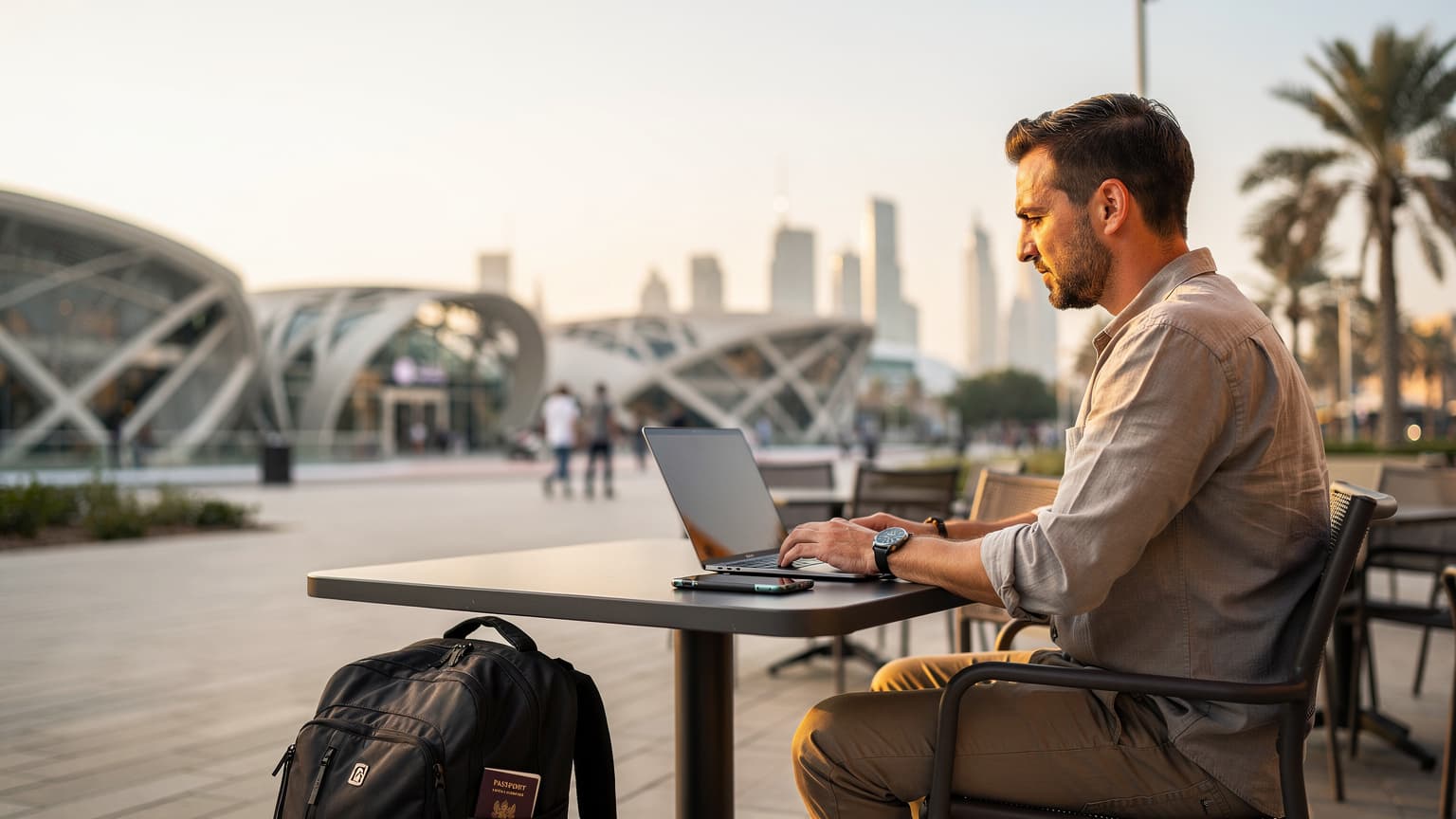
Why Dubai Expo 2026 Demands More Than Basic Connectivity
Dubai is a city built on ambition, and its World Expos are no exception. Expo 2026 isn't just a trade show, it's a global convergence of innovators, investors, and thought leaders. For attendees, this means a packed schedule of high-level meetings, exclusive networking events, and perhaps even a few clandestine dinners you absolutely cannot miss. Missed calls or dropped connections are not an option here, especially if you're trying to coordinate a last-minute car service or confirm a booking at one of those impossible-to-get-into restaurants.
I've been on the road for four years now, hopping between countries every few months. I've seen firsthand how crucial a stable data connection is, not just for work but for navigating the day-to-day logistics that make or break a trip. In a city like Dubai, where everything operates at a high tempo, reliable data is less a luxury and more a fundamental utility. Think about it: you'll need it for ride-sharing apps like Careem or Uber, accessing digital event passes, real-time translation tools, and of course, keeping up with WhatsApp groups that often hold the key to local insights and spontaneous meet-ups.
The sheer scale of the Expo site itself means you'll be covering significant ground. You'll move from presentation halls to pavilions, outdoor installations to curated dining experiences. While the Expo site will undoubtedly have Wi-Fi, it's rarely robust enough for consistent, secure usage, particularly when thousands of people are trying to do the same thing. Relying solely on public Wi-Fi is a rookie mistake I learned to avoid years ago, after one too many frustrating attempts to upload a critical document from a café in Lisbon.
The Pain Points of Traditional Connectivity at Major Events
Let's talk about the alternatives, and why they fall short.
- Local Physical SIM Cards: This used to be my go-to. Land, find a kiosk, buy a SIM, deal with activation bureaucracy. In some countries, like India or Brazil, you'll find that certain local banking apps or government services (like India's Aadhaar) actually require a local SIM for verification, which is a whole other layer of complexity. However, for a short, high-intensity trip like the Expo, the time and effort involved in acquiring a local SIM in Dubai, registering it, and getting it activated is time you simply don't have. You'll spend precious hours at the airport or a mall instead of heading straight to your hotel or an early event.
- International Roaming: Just don't. Seriously, don't. The bills I've seen some friends get after a week of international roaming would make your eyes water. It's an absolute money pit, designed to catch the unprepared traveler. For the cost of a few days of roaming, you could likely buy a decent eSIM package that lasts your entire trip, plus a solid meal or two.
- Pocket Wi-Fi Devices: These are better than roaming, but still clunky. Another device to charge, another device to carry, and another device to potentially lose. Plus, you're still relying on a single point of failure. If it dies, so does your connection.
The bottom line is, for an event of this magnitude, you need something that's ready to go the moment your plane touches down, something reliable, and something that won't distract you from the reason you're there.
The eSIM Advantage for High-Stakes Travel
This is where the eSIM shines, especially for a destination like Dubai and an event like the Expo. It's the kind of practical, no-bullshit solution that experienced travelers rely on. Think of it as a digital concierge for your connectivity needs.
An eSIM, or embedded SIM, is a small chip built into your phone (check if your device supports it, most newer models do, like the iPhone 17 and later). Instead of swapping out physical cards, you simply download a digital profile. This means you can purchase your data plan days or weeks before you even leave home, activate it with a QR code or manual entry, and be connected the second you land at Dubai International (DXB).
Immediate Connectivity, No Airport Scramble
The biggest benefit? No more fumbling for tiny SIM cards, no more searching for a vendor in a bustling airport, and no more dealing with language barriers or confusing activation processes. I've had situations where I've landed somewhere, needed to call a taxi or coordinate with an Airbnb host, and been stuck without data for an hour. That's an hour wasted, an hour of stress, and an hour where you're not getting things done. With an eSIM, you literally step off the plane, turn on your data, and you're good to go. It's a lifesaver for those critical first moments in a new country.
This immediate connectivity is particularly valuable in Dubai. Getting around is often app-dependent. Whether it's Careem for a ride, Talabat for food delivery, or simply Google Maps for navigation, you need data from the get-go. Waiting until you find Wi-Fi or a SIM card kiosk just isn't practical, especially when you have a tight schedule at the Expo.
Flexibility and Cost Efficiency for Your Trip
eSIMs offer a range of plans, from short-term data bundles perfect for a quick Expo visit to longer-term options if you're planning to extend your stay. You can often choose plans based on data allowance, duration, and even regional coverage, which can be great if you're planning to swing through other parts of the Middle East after the Expo. This flexibility means you only pay for what you need, avoiding the hidden fees and inflated costs of traditional roaming or the commitment of a long-term local contract.
For instance, if you're also planning a trip that covers multiple countries, say, a quick stop in Japan before heading to Dubai, a regional eSIM can be incredibly efficient. I recently compared Asia eSIMs versus single-country options for a friend heading to Thailand and Vietnam, and the savings were significant. This foresight is key for budget-conscious nomads.
Picking the Right eSIM Plan for Dubai
Not all eSIMs are created equal. When you're headed to an event like Expo 2026, you can't afford to compromise on coverage or speed. Dubai's infrastructure is top-tier, and your connectivity should match that standard.
Key Considerations for Your Dubai eSIM
Here’s what I look for when choosing an eSIM for a critical trip:
- Network Coverage: Dubai has excellent network infrastructure, primarily dominated by Etisalat and Du. Ensure your eSIM provider partners with one or both of these major local carriers to guarantee optimal coverage, especially around the Expo City site. You want to be on 5G where available.
- Data Allowance: How much data do you actually need? If you're using apps for navigation, social media, email, and some video calls, 10-20GB for a week-long trip is a good baseline. If you're doing heavy video conferencing or uploading large files, consider unlimited plans if available, or higher data caps.
- Validity Period: Match the eSIM's validity to your trip duration. Don't pay for 30 days if you're only staying for 7.
- Pricing: Compare pricing per GB. Sometimes a slightly larger package offers better value. Be wary of overly cheap options, as they might compromise on speed or reliability.
- Top-Up Options: Can you easily top up your data if you run out? This is critical. You don't want to be scrambling for data in the middle of an important meeting.
| Feature | eSIM Advantage | Traditional Roaming | Local Physical SIM |
|---|---|---|---|
| Activation Time | Minutes (pre-arrival) | Instant (but costly) | Hours (airport/store visit) |
| Cost Efficiency | Excellent (prepaid, no hidden fees) | Poor (exorbitant rates) | Good (but time investment) |
| Network Reliability | High (partners with local carriers) | Variable (depends on home carrier agreements) | High (direct local network) |
| Flexibility | High (various plans, easy top-up) | Low (fixed, expensive rates) | Medium (contractual obligations) |
| Convenience | Maximum (digital, no physical swap) | High (automatic, but costs) | Low (physical purchase, registration) |
Provider Options for Dubai
While there are many eSIM providers out there, I always recommend sticking to reputable ones that have direct partnerships with major local networks. This ensures you're getting the best possible service. For Dubai, look for providers that explicitly state their connection to Etisalat or Du. Don't just pick the cheapest option on a marketplace; those often come with hidden caveats like slower speeds or less reliable connections. If you're looking for alternatives to other popular eSIM services, always check their listed local network partners and review recent user experiences, especially for a high-demand city like Dubai.
Activating Your eSIM, A Step-by-Step Guide
Activating an eSIM is straightforward, but knowing the precise steps can save you a moment of panic. I always do this before I even pack my bags.
Pre-Departure Checklist
- Check Device Compatibility: Ensure your smartphone or tablet supports eSIM. Most newer iPhones (XS onward, including the iPhone 17), Google Pixels, and Samsung Galaxy models are compatible.
- Purchase Your eSIM: Buy your Dubai eSIM plan from a trusted provider. You'll receive a QR code or manual activation details via email.
- Download Relevant Apps: Install any necessary apps for ride-sharing (Careem, Uber), food delivery (Talabat, Noon Food), and navigation (Google Maps). Having these ready means you can hit the ground running.
- Backup Essential Information: Save screenshots of your eSIM QR code, activation instructions, and customer support contacts. If you run into any issues, you'll have everything at hand.
On-Arrival Activation Process
Once you've landed at Dubai International and cleared customs, you're ready to activate. This process usually takes less than two minutes:
- Connect to Wi-Fi (Initially): While your eSIM is designed for immediate data, a temporary Wi-Fi connection (often available free at airports) can be useful for the initial setup, just in case.
- Go to Settings: On your phone, navigate to 'Settings' then 'Cellular' or 'Mobile Data'.
- Add eSIM/Cellular Plan: Look for an option like 'Add eSIM' or 'Add Data Plan'.
- Scan QR Code: Use your phone's camera to scan the QR code provided by your eSIM provider. If scanning isn't working, or you received manual details, you can typically enter the information manually.
- Label Your Plan: Once activated, your phone will prompt you to label your new eSIM (e.g., 'Dubai Travel' or 'Expo 2026'). This helps differentiate it from your primary SIM.
- Set as Primary for Data: Crucially, set your new eSIM as your primary line for cellular data. Keep your home SIM active for calls and texts if you need to receive them (just be mindful of roaming costs for these), but use the eSIM for all data.
- Test Connection: Open a browser or an app like WhatsApp to confirm you have an active data connection.
Real-World Connectivity in Dubai, What to Expect
Dubai's network infrastructure is generally excellent. You can expect fast speeds and reliable coverage in most urban areas, including the Expo City site, major malls, and business districts. However, even in a city like Dubai, there are nuances.
Coverage and Speed in Key Areas
From my experience, coverage is consistently strong in areas like Downtown Dubai, Business Bay, and the Marina. Even in older neighborhoods like Deira or Bur Dubai, you'll find reliable 4G/5G. At co-working spaces like Astra Co-Working in Business Bay or A4 Space in Alserkal Avenue, you'll have phenomenal Wi-Fi, but your eSIM will serve as a reliable backup or primary connection when you're out and about. I recall spending a month near the Dubai Mall, and my data connection was always robust enough for video calls from my apartment (which cost me about AED 7,000 for a furnished one-bedroom, quite reasonable for the area) and navigating the vast city.
The Expo 2026 site itself, being a purpose-built smart city, will have extensive 5G coverage. However, during peak times, even the best networks can experience congestion. Your eSIM will ensure you have a dedicated, stable connection, less prone to the fluctuations of shared public Wi-Fi.
| Location/Activity | Expected eSIM Performance | Notes |
|---|---|---|
| Expo City Site | Excellent 5G/4G+ | High capacity, designed for heavy usage. May see slight congestion at peak event times. |
| Downtown Dubai (Burj Khalifa, Dubai Mall) | Excellent 5G/4G+ | Very strong coverage, consistent speeds for streaming and calls. |
| Jumeirah Beach Residence (JBR)/Dubai Marina | Excellent 5G/4G+ | Reliable, even in high-rise buildings and along the beach promenade. |
| Deira/Bur Dubai (Older neighborhoods) | Good 4G+ | Solid coverage, might experience slightly lower speeds compared to newer districts. |
| Public Transit (Dubai Metro) | Good to Excellent 4G/5G | Coverage generally holds well on the Metro, including underground sections. |
Apps That Thrive on Reliable Data
Certain apps are absolutely critical for navigating Dubai, and they'll perform best with a stable eSIM connection:
- Careem/Uber: Essential for transport. You'll use these constantly.
- Talabat/Noon Food: For food delivery, especially if you're staying in an apartment or working late.
- WhatsApp: Primary communication tool for everyone in Dubai.
- Dubai Now: A government app for various services, from paying bills to checking traffic.
- Expo 2026 Official App: Absolutely crucial for event schedules, navigation within the site, and potentially exclusive access features.
Managing Your Data and Staying Secure
Even with a generous data plan, it's wise to manage your usage, especially if you're attending a multi-week event like the Expo. And when you're connected, security should always be a top priority.
Data Conservation Tips
Here are a few tricks I've picked up over the years to make my data last:
- Download Offline Maps: Before you head out, download offline maps for Dubai on Google Maps. This saves data on navigation.
- Limit Streaming: Try to stream video or download large files only when you're on a reliable Wi-Fi network (like at your hotel or a co-working space).
- Update Apps on Wi-Fi: Configure your phone to only update apps when connected to Wi-Fi.
- Monitor Usage: Regularly check your data usage through your phone settings or your eSIM provider's app. This helps you avoid unexpected depletion.
- Disable Auto-Play: Turn off auto-play for videos on social media apps.
Security Best Practices on the Go
When you're constantly connected in a foreign country, a few security habits are non-negotiable:
- VPN Usage: Always use a Virtual Private Network (VPN) when connecting to public Wi-Fi, even if it's the Expo's official network. This encrypts your data and protects your privacy.
- Strong Passwords: Ensure all your online accounts have strong, unique passwords.
- Two-Factor Authentication (2FA): Enable 2FA on all critical accounts (email, banking, social media).
- Beware of Phishing: Be extra vigilant about suspicious emails or messages, especially those related to event access or payments.
Beyond the Expo, Dubai for the Long-Stay Nomad
While the Expo is a temporary draw, Dubai itself has become a magnet for digital nomads. If you're considering extending your stay, understanding the local dynamics is crucial. I've spent a few months in Dubai, and it's a very different experience once the novelty wears off and you settle into a routine.
Cost of Living and Visa Realities
Dubai isn't cheap, but it can be managed. A basic furnished studio apartment in a decent area like Jumeirah Village Circle (JVC) can run you anywhere from AED 3,500-5,000 per month. Food costs vary wildly, but if you're eating at local cafeterias or cooking at home, you can keep it reasonable. I used to grab a Shawarma and a fresh juice for about AED 25 at the food court in City Centre Me'aisem every Tuesday. Your overall cost of living, excluding rent, might be around AED 2,000-3,000 per month if you're mindful.
Visa limitations are a significant factor. Most tourists get a 30- or 90-day visa on arrival, but extending it or transitioning to a residency visa (like the new Digital Nomad Visa) requires planning and paperwork. Don't assume you can just stay indefinitely, as overstaying your visa can lead to hefty fines and entry bans. This is a critical point that many new nomads overlook when considering a longer stay, similar to the strict visa rules in Japan that I often warn people about in my WhatsApp groups. For more details on navigating longer stays, especially for families, a good resource might be an eSIM guide for family travelers in Japan in 2026, as similar planning principles apply.
Co-working Spaces and Community
Dubai has a thriving co-working scene. Beyond Astra and A4 Space, places like Foundry in Downtown Dubai offer excellent facilities and a great community. These spaces are invaluable, not just for reliable internet (which is usually fiber-optic and blazing fast), but for networking and feeling less isolated. It's where you'll find other nomads, entrepreneurs, and remote workers sharing tips on everything from finding a decent tailor to navigating the RTA (Roads and Transport Authority) system.
Troubleshooting Common eSIM Issues
Even with the best preparation, sometimes things go sideways. Knowing how to troubleshoot common eSIM problems can save you a lot of grief.
Quick Fixes for Connectivity Glitches
If your eSIM isn't working as expected, try these steps:
- Restart Your Phone: The oldest trick in the book, but often effective. A quick restart can resolve minor software glitches.
- Check Data Roaming Settings: Ensure 'Data Roaming' is turned ON for your eSIM profile. This might sound counter-intuitive since you're trying to avoid roaming charges, but for an eSIM operating on a local network through a third-party provider, this setting is often required.
- Verify APN Settings: Sometimes, the Access Point Name (APN) settings aren't configured automatically. Your eSIM provider should give you the correct APN to enter manually in your phone's cellular settings.
- Delete and Reinstall (Last Resort): If all else fails, you can try deleting the eSIM profile and reinstalling it using the original QR code. Make sure you have the QR code handy before you do this.
When to Contact Support
If you've tried the quick fixes and still have no connection, it's time to reach out to your eSIM provider's customer support. Have your order number and the details of your issue ready. A good provider will offer 24/7 support via chat or email, which is crucial when you're in a different time zone. I once had an issue with an eSIM in South Africa, where my data mysteriously disappeared. Their chat support had me back online within 15 minutes, which was a relief given I was trying to coordinate a Garden Route escape and needed maps.
Final Thoughts on Your Dubai Expo 2026 Connectivity
Dubai Expo 2026 is an opportunity to engage with global innovation, network with peers, and experience one of the world's most dynamic cities. Your connectivity shouldn't be a source of stress. By choosing an eSIM, you're not just buying data; you're investing in peace of mind, seamless access, and the ability to fully immerse yourself in the event without worrying about dropped calls or missing critical updates.
From the moment you touch down, having instant, reliable internet ensures you're always one step ahead. It's about being prepared, being efficient, and making the most of every moment at a high-stakes global event. Don't underestimate the power of a solid connection. It's your invisible concierge, ensuring every aspect of your Dubai experience, from event navigation to late-night food orders, runs flawlessly.
Frequently Asked Questions
What is the best way to get internet in Dubai for Expo 2026?
For Dubai Expo 2026, the best way to ensure reliable internet is by using an eSIM. It offers immediate activation upon arrival, avoids high roaming charges, and provides consistent high-speed data through local networks like Etisalat or Du, essential for event navigation and communication.
Can I use my existing phone number with an eSIM in Dubai?
Yes, you can. With an eSIM, you can keep your primary physical SIM active for calls and texts from your home number. You simply set the eSIM as your dedicated line for mobile data, ensuring you receive critical communications while benefiting from local data rates.
Are eSIMs cheaper than traditional roaming for Dubai?
Absolutely. eSIM plans for Dubai are significantly more cost-effective than traditional international roaming packages from your home carrier. You typically pay a flat, prepaid fee for a set amount of data, avoiding the exorbitant per-MB charges of roaming.
Do I need a local SIM for any specific apps or services in Dubai?
Unlike some countries where local banking or government apps require a local physical SIM for verification, most essential services and apps in Dubai (like Careem, Talabat, WhatsApp) function perfectly well with an eSIM providing data connectivity. A local physical SIM is generally not a necessity for tourists or short-term visitors.
What data speed can I expect with an eSIM in Dubai?
Dubai boasts excellent network infrastructure, and with an eSIM leveraging major local carriers like Etisalat or Du, you can expect high-speed 4G and widespread 5G connectivity. This ensures smooth streaming, fast downloads, and reliable video calls, even within the busy Expo 2026 site.
What if my eSIM doesn't activate or connect in Dubai?
If your eSIM encounters issues, first try restarting your phone and verifying that 'Data Roaming' is enabled for your eSIM profile in your phone settings. If problems persist, check for correct APN settings provided by your eSIM carrier. As a last resort, contact your eSIM provider's 24/7 customer support for assistance.